People Are Scientists, Mostly Bad Ones: An Introduction to Personal Construct Psychology
Most therapy frameworks ask what you feel. George Kelly's Personal Construct Psychology asks what you predict. An introduction to the framework that hands you back your accountability.

Most therapy frameworks open with the same move. They ask what you feel, where it comes from, who hurt you. The cause and effect runs from past to present: your childhood explains your adulthood, your wound explains your wounding. If you've spent any time in or around therapy you know the shape of this story.
George Kelly's Personal Construct Psychology, which he published in 1955 and which I'm currently training in, also takes the past seriously. The people who raised you handed you a set of meanings you'd never have invented alone, and that matters. What Kelly refuses to do is leave you sitting in the wreckage of your formative experiences with a perfect explanation and zero responsibility.
Kelly starts somewhere else entirely. He begins with what you predict.
The basic move
The core claim of Personal Construct Psychology is this: a human being is a creature who anticipates. Everything you do, think, feel, and avoid is in service of trying to predict what's coming next.
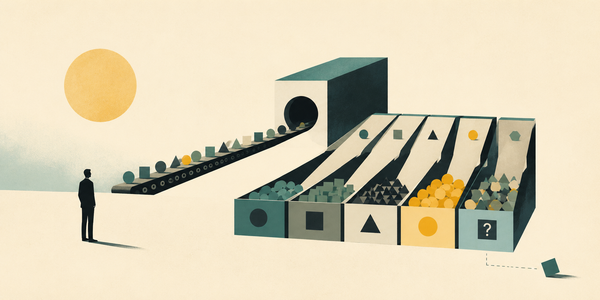
You walk into a meeting and read the room. You sense your partner's mood from the way they close the door. You decide whether to push back on your manager's feedback. You pick which coffee shop to go to. All of this is anticipation. You are reading futures and adjusting on the fly. Over a lifetime, you have built up an enormous library of dimensions for sorting events: this kind of meeting goes well, that kind goes badly; this kind of person can be trusted, that kind can't; this is the kind of feedback you can survive, that is the kind you can't. Kelly calls these dimensions constructs. You use them to predict.
A construct is bipolar. It always has two ends. "Trustworthy" only means something against its opposite. "Successful" only works as a category because there is such a thing as failure to be sorted against. You inherit some of these from your culture (your language and country hand you a vast number, mostly invisibly). You pick up others from your parents, your school, the first boss who made you cry. Some you build from scratch.
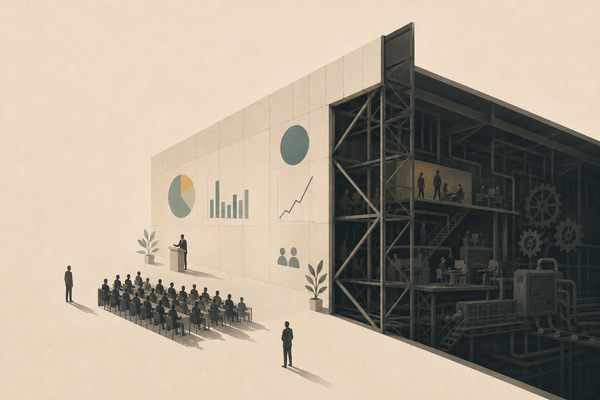
You walk around with thousands of these, organized into a hierarchy. Some constructs are central. Change them and your sense of self trembles. Others are peripheral and easy to let go of. This hierarchy is what Kelly calls your construct system. Calling it "beliefs" or "thoughts" misses what it is. It's the deep grammar your mind uses to sort experience into something you can act on.
You are always trying to anticipate
Here is the line in Kelly that does the most work: "A person's processes are psychologically channelized by the ways in which they anticipate events."
In plain English: how you live is shaped by how you predict.
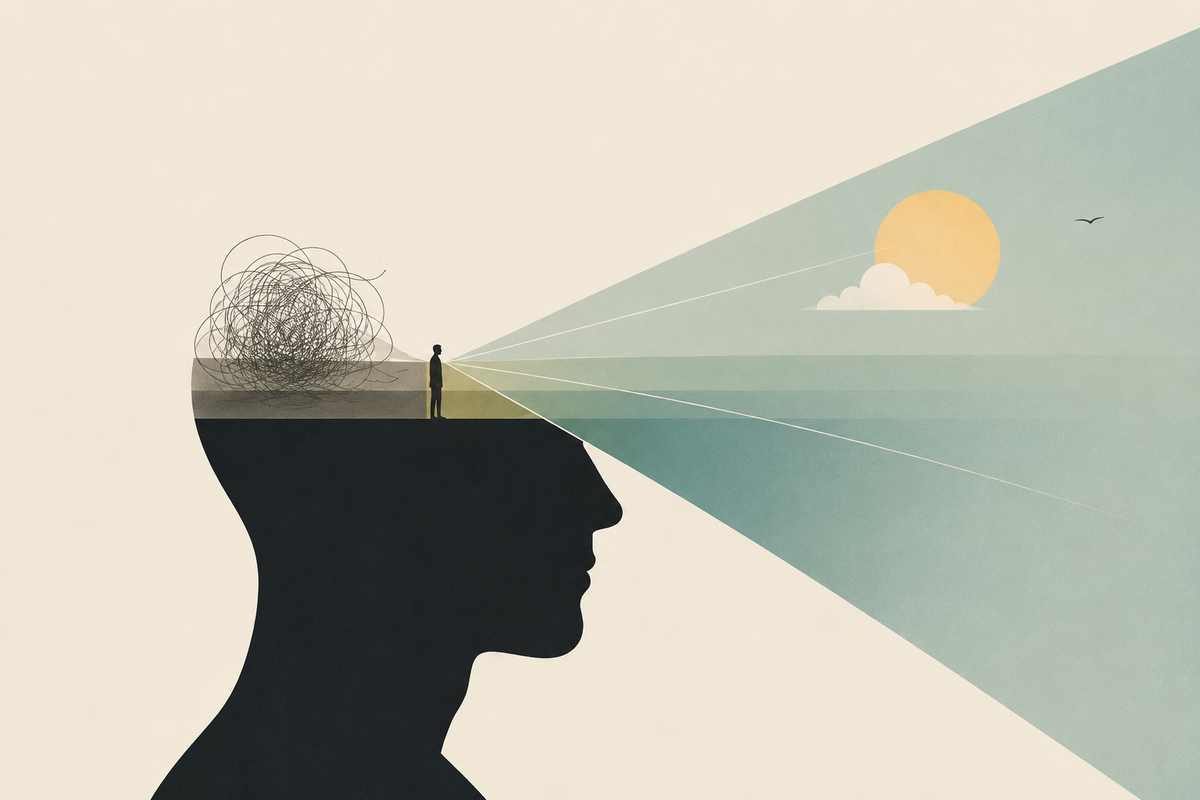
Notice what does the work in that sentence. Not memory. Not experience. The word is channelized. Directed, narrowed, shaped, by what you anticipate. The past matters because the past built your prediction engine. But the engine is now running forward.
This is why people who have done years of therapy and "understand their pattern" can still be stuck inside it. Understanding the origin of a construct does not automatically change the construct. The construct keeps running because it is still trying to predict your life. If "people abandon you" was a useful prediction in your childhood, your system keeps deploying it. It keeps making predictions, even bad ones, even painful ones, because making predictions is what minds do.
The work, in Kelly's framework, is examination. You look at what predictions your constructs are currently making. You notice where those predictions have stopped working. You revise.
What goes wrong
When a construct stops predicting well, things get uncomfortable. Kelly has a precise vocabulary for these moments that most people do not know, and it is worth learning.
Anxiety, in Kelly's terms, is the awareness that the event in front of you falls outside your construct system. You do not have a way to sort what is happening. You are missing the dimensions you would need. This is why entering a new job or a new culture or a new relationship can feel anxious even when nothing bad is actually happening. Your prediction engine is short on data.
Threat is the awareness that you are about to be forced into a comprehensive change in your core constructs. The constructs you use to know who you are are being challenged. This is why honest feedback at work can feel disproportionately painful: it is not the content, it is the threat to the self-construct underneath.
Guilt, in Kelly's specific use, has nothing to do with moral wrongdoing. It happens when you act in a way that displaces you from your core role. Acting in a way you do not recognize as you. A much more interesting definition of guilt than the standard one.
Hostility, and this is where Kelly gets sharp, is the continued effort to extort validation for a prediction that has already failed. You are predicting your boss will betray you, the evidence keeps suggesting they will not, and you find a way to interpret every gesture as betrayal anyway. You are forcing the world to confirm your construct. This is one of the most distinctive moves in Kelly's work, and it explains a lot about why people get stuck in interpretations of others that no amount of evidence will shift.
Constructs can change. You have to do it.
Here is where Kelly stops looking like a deterministic theory of childhood and starts looking like a theory of agency.
The construct system is inherited. You did not build it from scratch. The culture, the family, the school, the first person who hurt you, all of them handed you the materials. Fine. Acknowledged.
But the system is yours now. It is the prediction engine you walk around inside, and it is producing your life. You can examine it. You can notice which constructs are still working and which are quietly producing the same painful prediction you have been making for twenty years. You can revise.
This is brutally difficult. The constructs that hurt you the most are usually the ones organized highest in your hierarchy, which means revising them shakes everything else. People often resist this, sometimes for decades, sometimes for life. The hostility move is exactly this resistance: better to keep extorting evidence for a failed prediction than to revise the construct that has been holding the whole system in place.
But the framework insists, with a directness that is rare in therapy, that the responsibility for revising your constructs is yours. Your therapist's job is to help you see. The work itself is yours. Understanding why you are the way you are does not release you from the consequences of continuing to be that way.
This is the part of Kelly I love most. The cruel version of this idea says "your suffering is your fault." Kelly's version is more precise: your suffering is the output of a construct system, that construct system has a history, and the future of that system is still being decided by you.
Why this matters now
Most of us are walking around inside construct systems we never chose, deploying predictions we were given before we had language, in a culture that is itself a vast public construct system pressing on us constantly. The job tells you what success looks like. The market tells you what value means. The feed tells you what you should want. These are constructs being handed to you, and your prediction engine is absorbing them whether you have noticed or not. They look like facts, which is exactly why they work.
Kelly's framework gives you a way to step back and see them. Escape is not on offer. Awareness is. You can notice which of your predictions are yours and which were issued by someone else. You can examine where your anticipations have stopped working, and what it would mean to revise them.
Slow process. Uncomfortable. It puts the work back on you in a way that some people find liberating and others find unbearable.
But it is honest. And in a discipline that often hides agency behind explanation, that matters.